

An (unintentional) emerging theme in my posts here is the porousness of disciplinary boundaries. Back in Biting Bullets, I favorably discussed Timothy Williamson’s attempt to import some methodological concepts from contemporary science—heuristics and overfitting—to philosophy.1 And in my last post on Why I am Not a Humanist, I warned against a tendency to implicitly assume that just because some question was discussed in the past by writers in the humanistic tradition, it can be responsibly addressed today using solely humanistic methods, rather than natural and/or social science.
Today’s post will be something of a sequel to that last one, in which I zoom in on what I think is a mistaken way of drawing a particular social science/humanities boundary in thinking about the study of history. Here’s the thought I’ll be targeting. While one can study history in a social scientific way, as cliometricians do—constructing quantitative models that relate things like Nile flooding to ancient Egyptian tax revenue, and thereby making various predictions about how the course of Egyptian history would have been different had the weather been different—there’s also a distinctively humanistic approach to history, which is not concerned with identifying general laws of history, but instead involves constructing narratives about what actually happened in particular times and places of interest, and without any commitments about how things might have gone differently. The humanistic historian will tell us a detailed story about how World War One in fact unfolded, without any commitments whatsoever about how it would have unfolded differently had Franz Ferdinand never been shot.
This view—that proper history concerns what actually happened, and not what might have happened—has long had influential defenders. For example E.H. Carr, in What is History? remarks dismissively that “one can always play a parlour game with the might-have-beens of history”, but goes on to tell us that these might-have-beens have nothing to do with proper history. He tells us about readers whose impatience with history “takes the form, when they read history, of letting their imagination run riot on all the more agreeable things that might have happened, and of being indignant with the historian who goes on quietly with his job of explaining what did happen…”
Or Michael Oakeshott, in Experience and its Modes, tells us that “the distinction…between essential and incidental events does not belong to historical thought at all; it is a monstrous incursion of science into the world of history.”2
Carr and Oakeshott aren’t just drawing a distinction between a more social scientific and a more humanistic approach to history, but are also disparaging the social scientific, counterfactual-concerned approach to history as misguided.3 While one can draw a distinction similar to the one they’re getting at while thinking both approaches are valuable, I think it’s helpful to dwell a bit on why one might take the hostile stance they do towards counterfactual-involving history.
One might think that counterfactual history can never be adequately grounded in evidence. I think this is a mistake, though if your stereotype of counterfactual history is that it inevitably ends up as a genre of speculative fiction—and some certainly does—I can see why this thought would be tempting, and I’ll return to it at the end of this post. But why should this be? Why couldn’t we have good evidence for historical counterfactuals?
On one way of drawing the science/humanities distinction, science is concerned with general laws, while the humanities are concerned with the particular.4 There’s certainly some sociological truth in the neighborhood. I’m currently serving on the humanities tenure committee at my university, and it’s my first exposure to a wide range of academic writing in the humanities outside of philosophy. In my experience so far, humanists love to “problematize” this or that general principle: to show that things are more complicated, more resistant to compact description, than people have thought. By contrast, scientists, whether social or natural, are more eager to find informative generalizations, even if they involve smoothing over some matters of detail. “Fuck nuance,” they say. So if you think there are no laws of history—it’s just one damn thing after another—then you might, with Carr and Oakeshott, think that it’s a mistake to approach history as a (social) scientist.
While I’ll admit there’s some good distinction in the neighborhood, both as it concerns humanities versus science in general, and as it concerns approaches to the study of history in particular—after all, it’s undeniably true that some historians analyze quantitative data sets, while others travel to remote archives and pore over dusty tomes—I deny that it’s fruitful to understand it as turning on whether they concern themselves with counterfactuals. All historians, at least implicitly, must take on commitments concerning counterfactuals. Or at least, that’s what I’ll argue here.
Counterfactuals and Causation
I’ve been using the word “counterfactual” a lot, but haven’t yet said what I mean by it. I mean to be following standard usage in philosophy, on which counterfactuals are “if, then” statements where the “if” part is understood to be false.5 “If my son doesn’t nap this afternoon, he’ll be cranky” is an “if, then” statement, but not a counterfactual, since the “if” part concerns a future scenario that is not (yet) false.6 “If my son had napped this afternoon, he wouldn’t be so cranky” is a counterfactual; imagine it uttered in a scenario where my son did not nap, and where the statement concerns what would have happened if, counter to fact, my son had napped.
Philosophers have had a ton to say about counterfactuals. They’ve both been extensively discussed in their own right—what logic is appropriate to reasoning with counterfactuals? what makes them true or false?—but also used as a tool in thinking about other topics. One of the most important topics counterfactuals are used to think about is causation. The tradition of connecting counterfactuals and causation goes back at least as far as David Hume, who wrote the following in his Enquiry Concerning Human Understanding:
we may define a cause to be an object, followed by another…where, if the first object had not been, the second never had existed.
Suppose my son Ben hits a baseball at my neighbors window, and it breaks the window (true story). On the simple Humean picture, we get to say that the baseball was the cause of the broken window because if it hadn’t hit the window, the window wouldn’t have broken. Or, my grandmother’s smoking was the cause of her contracting emphysema because, if she hadn’t smoked so much, she wouldn’t have gotten emphysema.
Sadly, this simple definition can’t be quite right. Suppose Brutus stabs Caesar, killing him, with his co-conspirators looking on. But if Brutus had been sick that morning and hadn’t shown up at the agreed upon time, his co-conspirators would’ve done the deed without him. What caused Caesar’s death? Being stabbed by Brutus. But it’s not true that, if not for being stabbed by Brutus, Caesar wouldn’t have died. His dying on that day was “overdetermined”, in the lingo.
There’s a rich tradition not just in philosophy but also in the social sciences of trying to iron out the wrinkles in this definition of causation.7 For example, maybe we should say that the proper counterfactual to look at, when thinking about whether Brutus’ stabbing caused Caesar’s death, is one where we imagine that Brutus didn’t stab Caesar, and nobody else did. Will that work? If so, how can we earn our right to say it? That is, can we derive it from a more general story that tells us how to translate causal talk into counterfactual talk? These are thorny questions, but what’s significant for my purposes is that the dominant reaction to noticing that the simple counterfactual definition doesn’t quite capture what we mean by “cause” is to hold on to the idea that there’s an important connection between causation and counterfactuals, and to look for other, more subtle ways of capturing it. Roughly, the idea is that whatever we want to say about causation can be expressed somehow in terms of counterfactuals, even if it’s hard to provide a crisp, general definition of the one concept in terms of the other.
Causation in History
What’s the relevance of these general remarks about causation for the practice of history? If the humanistic historian wants to talk about causation, then she’s already taking on some counterfactual commitments. But it’s very hard to imagine doing history without talking about causation.
Even if our humanistic historian conceives of what they’re doing as just crafting a particular narrative—A happened, and then B, and then C—and not talking about anything that didn’t happen, if A, B, and C are to cohere as a historical narrative, then there had better be some causal connections between them. But that’s to take on commitments to the effect that A’s having played out very differently, or not at all, would’ve mattered to if and how B and C unfolded.
That was rather abstract, so let’s consider a concrete, paradigmatically humanistic historical question—why did Truman decide to drop the atomic bombs on Hiroshima and Nagasaki? Whatever insight we’re going to have here, it’s not going to come from analyzing quantitative data. Rather, it will involve close attention to and interpretation of texts—diary entries, diplomatic correspondences, internal memoranda, and the like. The major interpretive fault line concerns whether he was mainly motivated by a desire to avoid the loss of life that an invasion would have entailed, or instead was largely concerned with geopolitical strategy vis a vis the USSR. For example, perhaps he wanted to intimidate the Soviets, and/or to guarantee that the USA would play the primary role in dictating the post-war settlement in Japan. Depending on which of these positions you hold, you’ll inevitably have different commitments about how his decision might have played out differently, if various factors had been different.
The US dropped the first bomb on August 6, the USSR declared war on Japan on August 8, and the US dropped the second bomb on August 9, all of 1945. If you think geopolitical considerations were not playing a major role in Truman’s thinking, then you should probably think that even if the USSR hadn’t declared war—and if they hadn’t already agreed at Yalta to enter the war against Japan soon after Germany’s surrender—the US still would have dropped the second bomb around the same time it did. Alternatively, if you think Truman was largely concerned with ensuring that the US, rather than the USSR, would determine what post-war Japan would look like, then you should think that if the USSR hadn’t declared war when it did, and hadn’t been planning to invade Japan, Truman likely wouldn’t have dropped the second bomb when he did, and maybe not even the first.
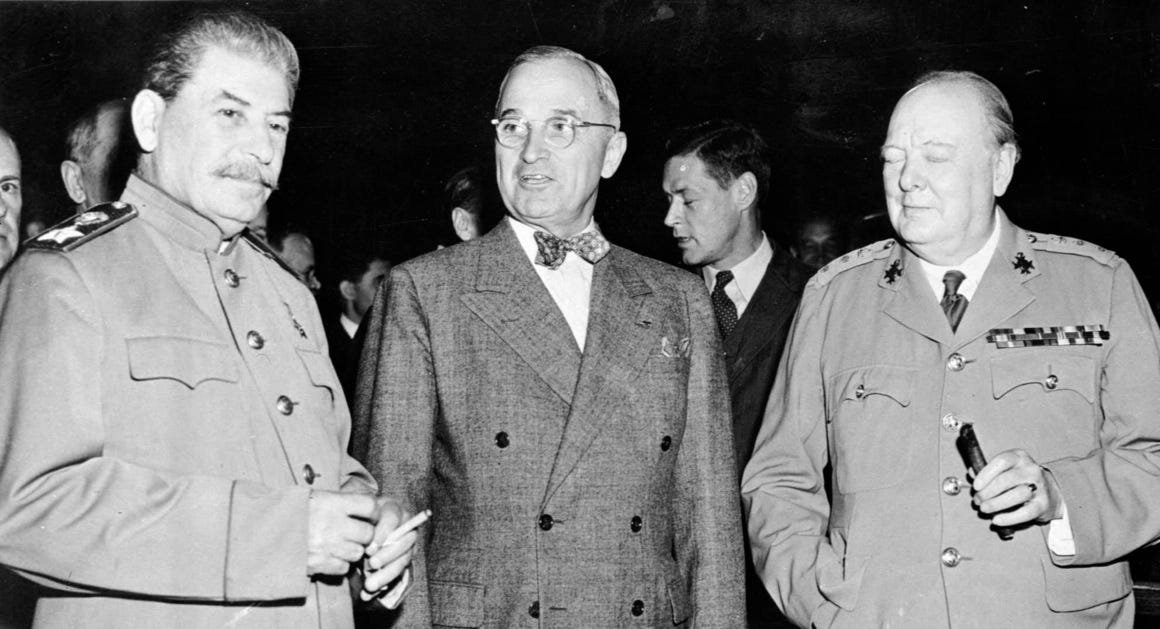
It’s hard to see how one could come to a view about what factors motivated Truman without thereby taking on some commitments about what would have made a difference to his decision. I picked the question of Truman’s motivations as it seems like an ideal case for the idea of history as a humanistic discipline concerned with particular events, rather than with general laws. I certainly grant that there are no historical laws that we can appeal to in answering why he decided as he did—Truman’s predicament was singular, and nobody in history before or since has faced a choice quite like the one he did. But even in that best case scenario for the humanistic conception of history, we find that we’re asking causal questions—what moved Truman to make the decision he did? What influenced his thinking?—and that the competing answers to those questions contrast in their counterfactual commitments.
Salvaging the Distinction
OK, that’s my main point. Doing history inevitably involves taking on commitments about counterfactuals, because doing history involves making causal claims, and once you’re making causal claims, you’re taking on commitments about counterfactuals. Still, isn’t there something right about the idea that some kind of particular/general distinction tracks the distinction between more humanistic and more social scientific approaches to history? I think there is. But to see it, we first need to ditch the idea that the humanistic historian is distinctive in eschewing laws.
As it turns out, the idea that science involves looking for general laws is a bit out of fashion, and I think for good reason. A standard potted history of the philosophy of science says that in the mid 20th century, philosophers treated fundamental physics as a kind of model for all of science. Fundamental physics looks for general laws—of gravity, electromagnetism, and the like—so we should understand chemistry, biology, and the rest of the sciences as doing something similar. Social scientists look for economic laws, or historical laws. But over time—starting in the 70s and 80s, and still holding today—a rough consensus emerged that lots of science isn’t fruitfully understood as searching for or discovering laws. Evolutionary biology has made great progress, but it’s hard to identify exceptionless, universally applicable laws of evolution. For almost any such putative law, you’ll be able to find counterexamples. Rather, progress in evolutionary biology has consisted in developing more and better models—none of which are universally valid—and in getting better at fitting these models to real-world biological phenomena.
Once we stop thinking of science as the search for universal laws and instead think of it as the construction of models with limited domains of applicability, the contrast with history looks different. Cliometric historians specify models explicitly and generate counterfactuals by varying parameters within those models—stuff like rainfall, or prices, or population. But we should also understand humanistic historians as constructing models, albeit qualitative, implicit ones, which are usually relatively limited in their scope. Our humanistic World War Two historian can be understood as constructing a kind of model of Truman’s psychology, which will carry implications concerning how he might have decided differently had the factors he was concerned with been different. The difference is not that one traffics in counterfactuals and the other does not. It is that one works with formal, parameterized models, while the other works with informal models whose counterfactual implications are less explicitly articulated.
None of this is meant as a criticism of the humanistic approach. The question of what motivated Truman is a perfectly good question, and it is pretty clearly not the sort of question that lends itself to quantification. We can’t capture the space of possibilities of interest—concerning the ways in which the factors affecting Truman’s decision could have varied—in terms of the values of some set of mathematical parameters. My point is not that such work should be replaced by regression analysis, but that even here the work of distinguishing between more and less plausible historical narratives inevitably involves judgments about what would have made a difference.
I think this way of understanding the contrast between humanistic and social scientific approaches to history can also help us make sense of the typical skeptical take of professional historians towards what I’ll call “full-blown” counterfactual history, without foreswearing counterfactuals entirely. A classic of the genre is the collection of essays, “If It Had Happened Otherwise.” It contains a piece by Winston Churchill himself, speculating about how World War One might have played out differently—or as it turns out, not at all—if Robert E. Lee had won the battle of Gettysburg. While I enjoy this sort of writing as fiction, I sympathize with historians who think it’s very different from what they aim to do. But the problem with such exercises is not that they involve counterfactuals. Rather, it’s that the counterfactuals at issue involve such distant possibilities, in which so many background conditions are simultaneously altered, that the writer of full-blown counterfactual history lacks the constraints that keep traditional historians grounded. Instead of asking how a particular decision might have changed had its immediate circumstances been different, the full blown counterfactual historian needs to imagine a major change and then project all of world events forward fifty years in which they take a very different trajectory—who can guess where things would have ended up?—to ask how World War One might have been different had the Confederacy won the American civil war. Carr was right that some “might-have-beens” are parlour games. He was wrong to think that counterfactual reasoning as such is alien to history.
See also my NDPR review of his book, which has come out since that post. It’s aimed more at academic philosophers than the Substack post was, and gets a bit more into the details of Williamson’s views both in the recent book and earlier work.
I think it’s fair to read “the distinction between essential and incidental events” as closely tied up with counterfactual thinking. If you say that World War One would have happened even if the archduke hadn’t been assassinated, you’re saying (in a way) that it’s not merely incidental. Whereas if you insist that its occurrence was in fact highly sensitive to its actual initial conditions, then you’re saying it’s incidental. At least, that’s how I read Oakeshott; that kind of distinction is the one he’s saying—wrongly—proper humanistic historians won’t make.
I’ve learned since writing this post that my characterization of Carr’s views on history as more humanistic than social scientific is not accurate. Having gone back and read more, his view is hard to summarize, but he definitely thinks history has important aspects in common with social sciences. That is, while I think there’s a natural connection between skepticism about historical counterfactuals, and skepticism about social scientific history, that’s not how Carr saw things. I suspect I’d find his overall take on history—were I to read more closely—pretty attractive, but would just insist that his claim about “might-have-beens” doesn’t fit neatly within it.
How did this happen? I went looking for quotes expressing skepticism about historical counterfactuals, and found Carr’s, and while I looked at the immediate context surrounding the quote, I didn’t look further to see what he said about social sciences and humanities, but just hastily generalized from what I took to be the natural implications of his stance on counterfactuals.
I learned from my colleague Jake McNulty that an early version of this distinction was drawn by the post-Kantian philosopher Wilhelm Windelband, who called the generalizing approach to knowledge “nomothetic”, and the particularizing approach “idiographic.” Thanks Jake!
This is actually a bit thorny. E.g., consider: “If Jones had ingested arsenic, he would be showing exactly the symptoms he is now.” Grammatically, that looks and sounds a lot like familiar counterfactuals, but it can clearly be uttered in a way that doesn’t presuppose that the “if” part is false; rather, we might become convinced that the “if” part is true, by first becoming convinced of the conditional.
Philosophers and linguists typically call it an “indicative conditional.”
See the SEP entry on Causal Modeling.
This post resonates with me as a law prof who teaches torts! In tort lawsuits, we ask juries to determine factual causation by asking if the defendant's negligence was a "but-for" cause of the plaintiff's injury--an explicit appeal to counterfactuals.
But I'd like to offer a qualified defense of the historian's aversion to counterfactuals: it might serve as a useful check on the human tendency toward overconfidence about our own knowledge.
Consider, as an analogy, the use of "historical cost" in accounting. When accountants put together a business's balance sheet, they value many of the business's assets by their historical cost--what the business paid for the asset when the business bought it. In many cases, the historical cost of an asset will be out of step with its market value. For example, a building that the business purchased 20 years ago might have appreciated in value dramatically as the neighborhood around it improved. But the accountant will use the decades-old historical cost rather than attempt to estimate the building's current market value.
Why does accounting use this fiction? The market value of many assets is hard to estimate, and businesspeople might--consciously or unconsciously--be overconfident when they value their business's assets. Historical cost accounting checks that impulse.
That's how I understand the historian's aversion to counterfactuals. We might be overconfident when we speculate about what might have happened. So historians have adopted a norm that tamps down on speculation, even though, as Dan explains, they are necessarily reasoning about counterfactuals when they make causal claims.
Edit: I should add I don’t think this is exactly unique to the humanities but those have been the debates where I’ve been annoyed by it recently.
Edit 2: I was posting on my phone and ended up screwing up my original comment so I just deleted it then reposted.
Great post that gets at one of my biggest gripes with some humanities types. Their refusal to be explicit about the counterfactuals implied by their causal claims, in particular as they pertain to the present state of affairs, lets them smuggle in entire worldviews without ever testing them against reality. Does capitalism cause poverty? Is colonialism responsible for all the woes of the global South? Both judgments pivot entirely on the realistic alternative, for which they substitute a sort of utopianism that justifies their political project.
Also, wrt the move away from laws in the sciences, I was reading a paper yesterday that referenced Cajal's laws of neuronal optimization and thought, what a fun anachronism. Even if we end up talking about similar types of optimization objectives in the modern abstraction-correspondence framework, the linguistic tic reminded me of the physics envy of the past, which has since been replaced by all new kinds of even more advanced physics envy.